


Emerging Trends in Sustainable Architecture
Samuel Wright September 17, 2025
As the world becomes more aware of environmental challenges, sustainable architecture has become a driving force in the design and construction of buildings. From reducing energy consumption to using eco-friendly materials, sustainable architecture focuses on minimizing the impact of buildings on the environment. As we move into 2025, several emerging trends in sustainable architecture are shaping the future of the built environment, and they’re not only about reducing the carbon footprint but also about creating healthier, more efficient spaces for people.
In this article, we’ll dive into the latest trends in sustainable architecture and explore how these innovations are transforming the construction industry, improving energy efficiency, and contributing to a greener, more sustainable future.
Why Sustainable Architecture Matters
The need for sustainable architecture has never been more pressing. According to the United Nations Environment Programme (UNEP), buildings account for nearly 40% of global energy consumption and 36% of CO2 emissions. As the global population grows and urbanization increases, building cities and infrastructure that are energy-efficient and environmentally responsible is crucial.
Sustainable architecture isn’t just about green building certifications like LEED (Leadership in Energy and Environmental Design), it’s about rethinking how we design, construct, and operate buildings with long-term environmental sustainability in mind. The 2025 trends highlighted in this article are setting the stage for a greener, more efficient way of building for the future.
1. Biophilic Design: Bringing Nature Into Buildings
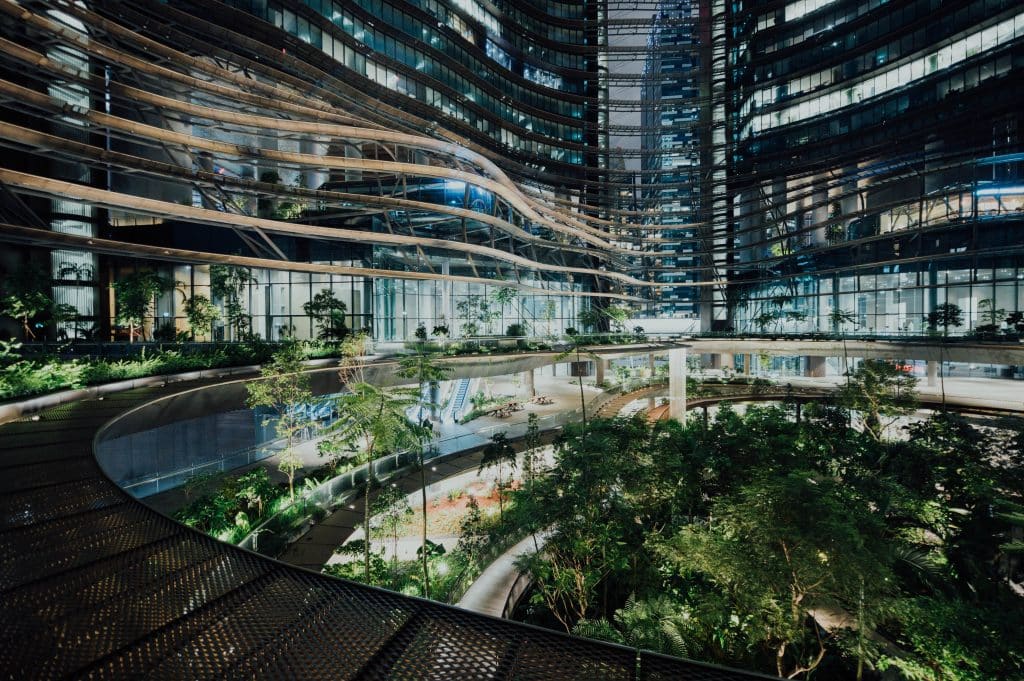
Biophilic design is one of the most exciting trends in sustainable architecture today. It’s based on the concept of incorporating natural elements into the built environment to improve the well-being and productivity of occupants. In 2025, architects are increasingly designing buildings that blur the line between indoors and outdoors, creating spaces that foster a connection with nature.
Key Features of Biophilic Design:
- Indoor plants: Integrating green plants into interior spaces not only improves air quality but also boosts mental well-being.
- Natural light: Maximizing daylight through large windows, skylights, and glass walls helps reduce the need for artificial lighting, while also improving mood and productivity.
- Natural materials: Using materials such as wood, stone, and natural fibers connects the building with the natural environment and reduces the reliance on synthetic materials.
Biophilic design has been shown to reduce stress, increase creativity, and even improve cognitive function, making it a win-win for both the environment and the people who use the buildings.
Key Benefits:
- Improves mental and physical well-being
- Enhances the aesthetic appeal of a space
- Reduces energy consumption by maximizing natural light
2. Energy-Efficient Buildings: The Rise of Passive Design
Energy efficiency remains one of the core principles of sustainable architecture, and the trend of passive design is gaining momentum in 2025. Passive design focuses on minimizing the need for mechanical heating, cooling, and lighting by optimizing the building’s orientation, insulation, and ventilation.
Passive Design Strategies:
- Building orientation: Placing windows to maximize sunlight and heat during the colder months and minimizing direct sunlight in the summer can reduce the need for heating and cooling.
- Insulation: High-performance insulation materials keep indoor temperatures stable and reduce the reliance on HVAC systems.
- Natural ventilation: Proper airflow through the building can eliminate the need for air conditioning by cooling spaces naturally.
This approach not only cuts down on energy usage but also lowers operational costs, making buildings more efficient and sustainable in the long term.
Key Benefits:
- Reduced energy consumption
- Lower utility costs
- Increased comfort for occupants
3. Sustainable Materials: From Recycled to Regenerative
The use of sustainable materials is a key trend that continues to evolve in the construction industry. In 2025, architects and builders are increasingly turning to recycled and regenerative materials that have a lower environmental impact. These materials are sourced and produced with minimal energy use, and many are designed to be reused or repurposed at the end of the building’s lifecycle.
Notable Sustainable Materials:
- Recycled steel and aluminum: These materials are durable and can be reused without degrading their quality, significantly reducing resource consumption.
- Bamboo: As a fast-growing and renewable material, bamboo is being used for flooring, walls, and even structural elements.
- Reclaimed wood: Sourcing wood from old buildings or forests helps reduce deforestation and provides a sustainable alternative to new timber.
- Regenerative materials: Materials like hempcrete, which is made from hemp, lime, and water, are gaining popularity due to their low carbon footprint and high insulation properties.
By using materials that can be recycled or regenerated, buildings are not only more sustainable but also contribute to a circular economy, where products and materials are reused instead of discarded.
Key Benefits:
- Lower environmental impact
- Reduced waste and resource consumption
- Support for a circular economy
4. Smart Building Technology and Automation
As technology continues to advance, smart building systems are becoming integral to sustainable architecture. In 2025, smart building technologies are enhancing energy efficiency, improving occupant comfort, and reducing operational costs. These systems use sensors, automation, and real-time data to optimize everything from lighting and temperature control to water usage and waste management.
Key Smart Building Features:
- Automated lighting: Using motion sensors and daylighting systems, smart lighting automatically adjusts based on occupancy and natural light levels, reducing energy consumption.
- Smart thermostats: These systems learn user behavior and adjust heating and cooling schedules to optimize energy use, saving both energy and money.
- Water-saving systems: Smart water systems monitor usage and adjust flow rates to minimize waste, making it easier to manage water consumption in both residential and commercial buildings.
As more buildings adopt these technologies, we’re likely to see a significant reduction in the carbon footprint of buildings, making them not only more sustainable but also more cost-effective for owners and tenants.
Key Benefits:
- Increased energy and water efficiency
- Lower utility bills
- Greater comfort and control for occupants
5. Carbon-Neutral and Net-Zero Buildings
In response to global climate change, the trend toward carbon-neutral and net-zero energy buildings is gaining traction. These buildings are designed to produce as much energy as they consume over the course of a year, essentially offsetting their carbon footprint. In 2025, more architects and builders are aiming for these ambitious goals to help meet international climate targets.
Key Features of Carbon-Neutral and Net-Zero Buildings:
- On-site renewable energy generation: Solar panels, wind turbines, and other renewable energy sources are used to power the building’s operations.
- Energy-efficient building design: Highly efficient insulation, windows, and systems ensure minimal energy loss.
- Carbon offset programs: Buildings may invest in carbon offset programs, such as tree planting, to balance out any remaining emissions.
With the construction industry being a major contributor to global emissions, moving toward net-zero buildings is a vital step toward a sustainable future.
Key Benefits:
- Significant reduction in carbon emissions
- Lower operational costs over the building’s lifetime
- Contribution to global climate goals
6. Green Roofs and Vertical Gardens
Green roofs and vertical gardens are becoming popular features in sustainable buildings, especially in urban areas. These living roofs not only provide insulation and reduce energy costs but also help mitigate the effects of climate change by absorbing CO2 and providing habitat for local wildlife.
How Green Roofs Help:
- Insulation: Green roofs improve energy efficiency by providing an additional layer of insulation, reducing the need for heating and cooling.
- Stormwater management: Green roofs absorb rainwater, helping reduce runoff and prevent flooding in urban areas.
- Air quality improvement: Plants on green roofs and vertical gardens filter pollutants from the air, improving urban air quality.
These green spaces also contribute to mental well-being, providing city dwellers with more green areas to relax and unwind.
Key Benefits:
- Improved energy efficiency
- Enhanced urban biodiversity
- Better air quality and stormwater management
Conclusion
The trends in sustainable architecture for 2025 reflect a growing commitment to reducing the environmental impact of the built environment. From biophilic design and energy-efficient buildings to the use of sustainable materials and smart building technologies, these innovations are not only enhancing the sustainability of buildings but also improving the quality of life for occupants.
As we look toward the future, it’s clear that the construction industry is moving in a direction where sustainability is no longer optional but a critical factor in creating buildings that are efficient, resilient, and better for the planet. By embracing these emerging trends, we can build a future where both people and the environment thrive together.
References
- United Nations Environment Programme (UNEP) – Sustainable Architecture- https://www.unep.org
- Biophilic Design and Green Buildings- https://worldgbc.org/
- Sustainability in Architecture- https://hbr.org/

 How Music and Arts Enhance Mental Wellbeing


