


Tips for Maintaining Healthy Workspaces at Home
Benjamin Scott September 18, 2025
With the rise of remote work, maintaining a healthy workspace at home has become more crucial than ever. A healthy workspace doesn’t just mean a comfortable chair or a neat desk—it’s about creating an environment that supports your physical, mental, and emotional well-being. As we progress further into 2025, a host of new trends and tools are emerging to enhance home workspaces, making them not only more efficient but also conducive to overall health.
Whether you’ve been working from home for years or are just starting, these tips will help you create a healthier and more productive home workspace.
Why a Healthy Workspace Matters
Remote work has led to many benefits, such as flexible hours and the ability to personalize your workspace. However, it also comes with challenges. A poorly designed workspace can lead to physical discomfort, mental fatigue, and a decrease in productivity. According to a 2024 study by Forbes, 70% of remote workers experience some form of back pain due to improper ergonomics, while 40% report mental fatigue from working in isolated or cluttered environments.
Moreover, long hours spent in front of screens, bad posture, and a lack of natural light can all negatively impact health. Maintaining a healthy workspace is essential not only for comfort but also for preventing burnout and boosting creativity and focus. So, how can we make our home workspaces more conducive to health and productivity? Let’s look at the latest trends and strategies.
1. Ergonomic Furniture: The Foundation of Health
When it comes to home office furniture, ergonomics is key. An ergonomic setup reduces physical strain, increases comfort, and promotes better posture. As the demand for home office furniture continues to grow, companies are increasingly focusing on ergonomics in their designs.
Key Ergonomic Elements:
- Ergonomic chair: Look for a chair that supports the natural curve of your spine, with adjustable seat height, armrests, and lumbar support.
- Standing desk: Standing desks are increasingly popular for reducing the strain from long hours of sitting. Adjustable height desks allow you to alternate between sitting and standing, improving circulation.
- Footrest and keyboard tray: Elevating your feet can improve posture, while a keyboard tray allows you to keep your hands at the right height for typing.
Brands like Fully and Uplift Desk are leading the charge in creating ergonomic furniture that promotes a healthier work environment. By investing in ergonomic furniture, you’re setting yourself up for long-term comfort and productivity.
2. Maximizing Natural Light for Mental Well-being
In 2025, lighting is not just about brightness—it’s about the quality of light that promotes well-being. Studies show that natural light can have a significant impact on your mood and energy levels. A study by the American Society of Interior Designers found that people who work in spaces with ample natural light experience better sleep quality, reduced stress, and higher productivity.
Ways to Bring Natural Light into Your Workspace:
- Place your desk near a window: Positioning your desk near a window can allow you to benefit from natural light. If possible, face your desk toward the window to avoid glare on your screen.
- Use light-colored or reflective surfaces: Light-colored walls, desks, and furniture reflect natural light, making the room feel brighter and more open.
- Consider smart lighting: If natural light is limited, consider installing adjustable smart lights that mimic natural daylight. Some advanced lighting systems automatically adjust based on the time of day, helping to maintain a consistent level of brightness.
Embracing natural light not only enhances physical health but also fosters a sense of well-being, helping you stay energized and focused throughout the day.
3. Indoor Plants: Bringing Nature into Your Space
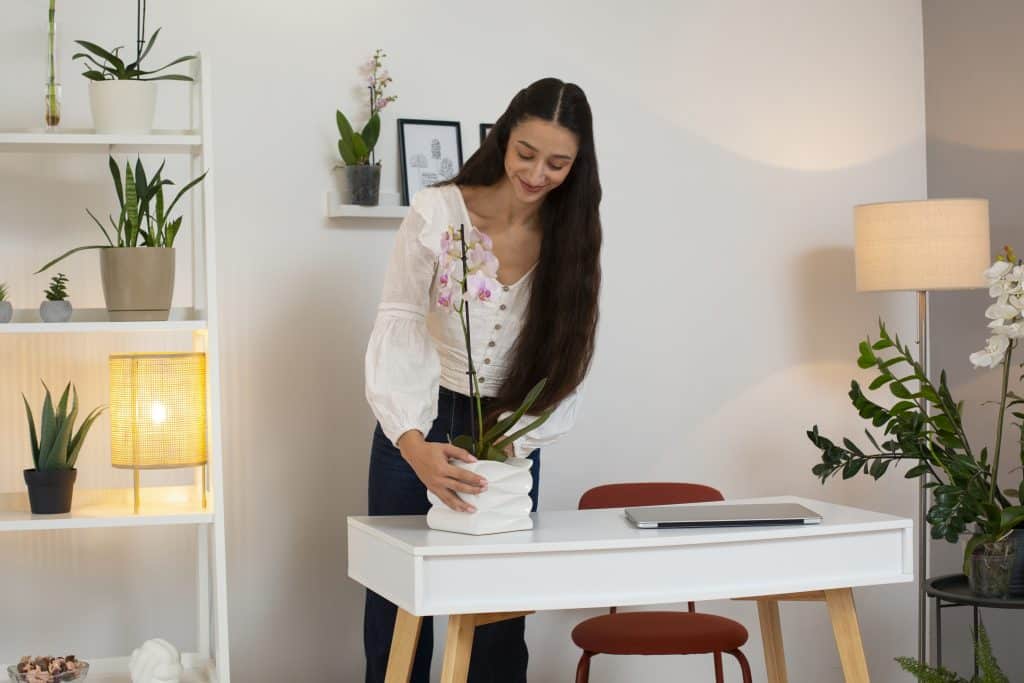
As we continue to explore ways to improve home workspaces, biophilic design has become a trending concept. Biophilic design emphasizes the connection between humans and nature, recognizing that indoor plants can improve air quality, reduce stress, and increase creativity.
Benefits of Indoor Plants:
- Stress reduction: Studies show that the presence of plants in your workspace can lower cortisol levels, helping you feel more relaxed.
- Improved air quality: Plants absorb carbon dioxide and release oxygen, purifying the air and making the environment healthier.
- Enhanced creativity: Having greenery around can help improve cognitive function and boost creativity, making it easier to brainstorm and think critically.
Popular indoor plants like snake plants, peace lilies, and succulents are perfect for home offices. They don’t require much care, but their presence can significantly impact your workspace’s ambiance and your mental health.
4. Digital Detox and Mental Clarity
In 2025, mental well-being is just as important as physical health. As digital tools become increasingly integrated into our work, the risk of digital burnout grows. Taking regular digital detoxes is essential for maintaining mental clarity, focus, and overall well-being.
Practical Tips for a Digital Detox:
- Schedule tech-free breaks: Set boundaries by scheduling regular breaks away from screens. Use a timer to remind yourself to step away from your computer for a few minutes every hour.
- Practice mindfulness: Meditation apps like Headspace or Calm can help you relax and focus. Taking a short mindfulness break can significantly reduce stress and clear your mind.
- Use physical tools: Keep a paper notebook or sticky notes for jotting down ideas, rather than relying solely on digital devices.
By integrating mindfulness and digital detox practices into your routine, you’ll be able to maintain a sharp focus, reduce stress, and stay energized throughout the day.
5. The Importance of an Organized Workspace
An organized workspace can have a direct impact on your productivity and mental clarity. Clutter creates distractions and contributes to feelings of stress and anxiety. In contrast, a clean, organized workspace fosters a sense of control, making it easier to focus on tasks and reduce procrastination.
Tips for Organizing Your Home Office:
- Declutter regularly: Set aside time at the end of each day or week to clear your desk of unnecessary items.
- Use storage solutions: Invest in storage solutions such as filing cabinets, drawer organizers, and shelves to keep your workspace tidy and efficient.
- Digitize paperwork: Minimize paper clutter by scanning important documents and storing them digitally.
Keeping your workspace organized helps to create a calm and efficient environment that promotes productivity and reduces unnecessary stress.
6. Investing in Good Air Quality
Clean air is essential for maintaining a healthy workspace. Poor air quality can lead to headaches, fatigue, and decreased concentration. With more people working from home in 2025, it’s essential to ensure that your workspace has adequate ventilation and clean air.
Ways to Improve Air Quality:
- Air purifiers: Invest in an air purifier with a HEPA filter to remove dust, allergens, and pollutants from the air.
- Regular ventilation: Open windows to allow fresh air to circulate, especially if you’re using a lot of electronics that can generate heat.
- Avoid toxic materials: Choose non-toxic paints, furniture, and cleaning supplies to reduce exposure to harmful chemicals.
Improving the air quality in your workspace not only enhances comfort but also contributes to better focus and energy levels.
Conclusion
Creating a healthy workspace at home involves more than just having the right furniture. It’s about considering ergonomics, natural elements, mental well-being, and maintaining a sense of balance. By focusing on elements such as ergonomic design, natural light, indoor plants, and regular digital detoxes, you can cultivate a workspace that promotes both physical and mental health. As we move forward into 2025, maintaining a healthy workspace will continue to be essential for personal well-being and professional success.
References
- Ergonomic Furniture: The Foundation of Health- https://www.forbes.com
- Maximizing Natural Light for Mental Well-being- https://solatube.com
- Indoor Plants: Bringing Nature into Your Space- https://www.wework.com

 Strategies for Effective Corporate Training Programs


